Please don’t feed wildlife
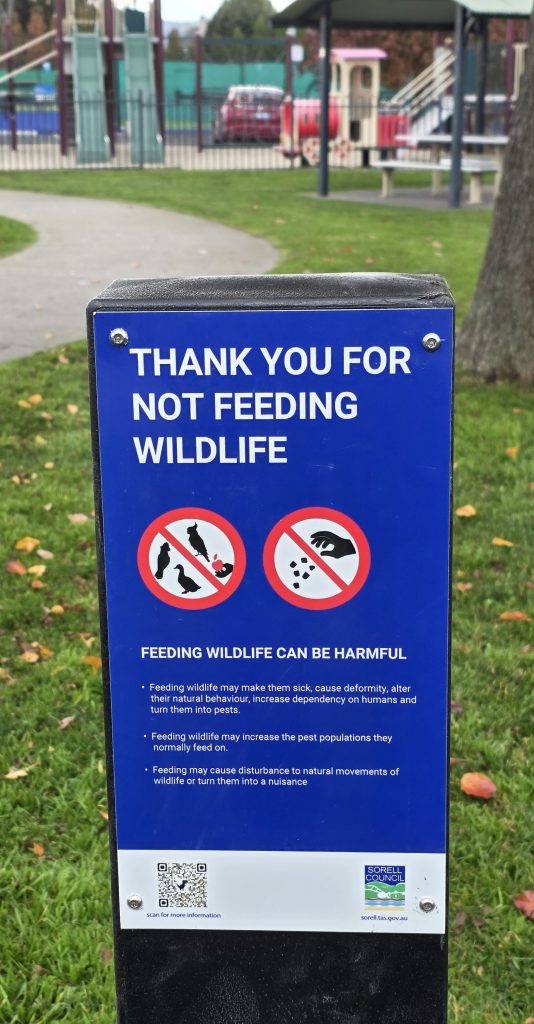
Our beaches, wetlands, reserves and neighbourhoods support a rich variety of native wildlife. Around places such as Pitt Water–Orielton Lagoon and its connected waterways, animals and birds rely on natural food sources and healthy habitat to survive. While it may seem kind, feeding wildlife can do more harm than good.
Hand feeding wildlife can lead to poor nutrition, disease spread, and changes in natural behaviour. Animals may become aggressive, lose their natural foraging skills, or become dependent on people for food. It can also attract pests, create nuisance behaviour, damage property and negatively impact water quality. Where birds gather in large numbers at feeding points, the risk of disease transmission also increases.
In Tasmania, species such as wallabies, possums, ducks, parrots and currawongs can all be affected by human feeding. NRE Tasmania advises that processed foods are not suitable for native wildlife and can make them sick. Feeding waterbirds in particular can contribute to nutritional imbalances, increased droppings, bacteria build-up and excessive algae growth in waterways.
The best way to support wildlife in your area is to keep it wild. Enjoy animals from a distance, avoid leaving food scraps, secure bins and pet food, and help protect habitat by planting native species. A wildlife-friendly garden provides natural food and shelter, supporting birds and animals the way nature intended.
Why feed once when you can support wildlife for generations by planting native plants in your garden?
How you can help
- Observe wildlife from a distance and never offer food
- Take rubbish and food scraps home, and keep bins closed
- Plant native vegetation or create wildlife-friendly habitat instead of feeding animals
For more information: